Spinal Stenosis Symptoms: Early Signs and When to Seek Care | Chiropractic First
Spinal stenosis symptoms may include back or neck pain, numbness, tingling, muscle weakness, and difficulty walking. Symptoms develop when narrowing in the spine puts pressure on nearby nerves or the spinal cord. Some people have no symptoms, while others experience discomfort that affects daily activities.
At Chiropractic First, we help patients understand their spinal health and explore appropriate care options based on their individual needs.
Understanding spinal stenosis
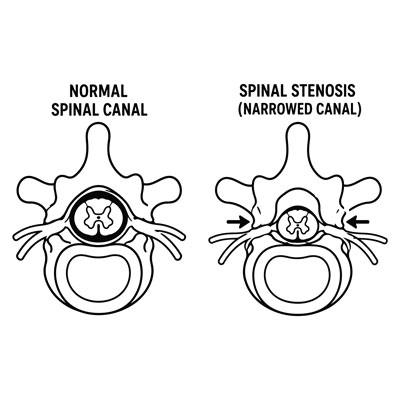
Spinal stenosis occurs when the spaces inside your spine become narrower, potentially putting pressure on nearby nerves or the spinal cord.
It most commonly affects two areas:
- Lumbar spinal stenosis: Narrowing in the lower back that may cause pain, numbness, or weakness in the legs.
- Cervical spinal stenosis: Narrowing in the neck that may affect the arms, hands, or balance.
Spinal stenosis often develops gradually with age. However, not everyone with spinal narrowing experiences symptoms.
Common spinal stenosis symptoms and early warning signs
Spinal stenosis symptoms vary depending on the location and severity of nerve compression. They may develop slowly, come and go, or become more noticeable during certain activities.
Common signs include:
- Back or neck pain: Discomfort in the lower back or neck that may spread to nearby areas.
- Numbness or tingling: A pins and needles sensation in the arms, hands, legs, or feet.
- Muscle weakness: Reduced strength that may make walking, gripping objects, or performing daily tasks difficult.
- Pain when standing or walking: Leg pain, heaviness, or cramping that increases during activity, especially with lumbar spinal stenosis.
- Relief when sitting or bending forward: Lower back and leg symptoms may improve when you sit or lean forward.
- Balance and coordination problems: Difficulty walking steadily or using your hands, particularly when cervical spinal stenosis affects the spinal cord.
Symptoms may develop slowly, come and go, or become more noticeable during certain activities. Some people experience no symptoms despite having spinal narrowing.
Lumbar vs. cervical spinal stenosis symptoms
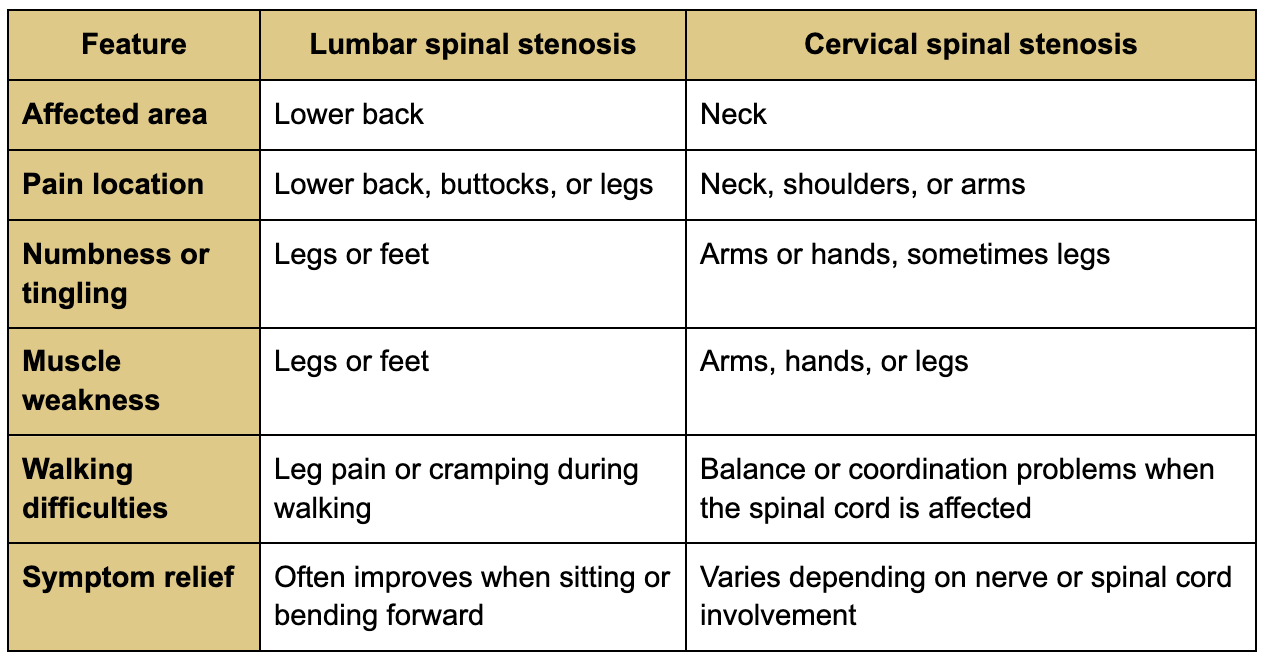
The location of spinal stenosis determines which nerves may be affected and where symptoms appear.
Lumbar spinal stenosis symptoms
Lumbar spinal stenosis affects the lower back and commonly causes symptoms in the buttocks, legs, or feet.
One characteristic symptom is neurogenic claudication, which describes leg pain, heaviness, or cramping that develops during standing or walking.
You may notice:
- Pain or discomfort after walking a certain distance.
- Numbness or tingling in one or both legs.
- Leg weakness or a heavy feeling.
- Symptoms that improve when sitting or bending forward.
Some people feel more comfortable leaning over a shopping cart because bending forward may temporarily create more space around the affected nerves.
Cervical spinal stenosis symptoms
Cervical spinal stenosis affects the neck. Symptoms depend on whether the narrowing compresses nerve roots, the spinal cord, or both.
Common symptoms include:
- Neck pain that may spread into the shoulders or arms.
- Numbness or tingling in the hands.
- Weakness when gripping or holding objects.
- Difficulty with small movements, such as buttoning clothes or writing.
- Unsteady walking or balance problems when the spinal cord is affected.
Some symptoms overlap with those of a pinched nerve in the neck. However, spinal cord compression can cause more serious problems with coordination and walking.
New hand coordination problems, weakness, or balance changes should be evaluated promptly.
What causes spinal stenosis?
Spinal stenosis most commonly develops because of changes in the spine over time. These changes can reduce the space available for nerves.
Common causes include:
- Age related changes: Wear and tear in spinal joints and discs can gradually narrow the spinal canal.
- Bone spurs: Arthritis may cause extra bone growth that takes up space around nerves.
- Herniated discs: Disc material can push outward and contribute to narrowing. A herniated disc may also irritate nearby nerves.
- Thickened ligaments: Ligaments supporting the spine may become thicker and reduce available space.
- Spinal injuries: Fractures or other injuries can sometimes affect the spinal canal.
Spinal stenosis is more common in adults over 50, although younger people can develop it because of injuries or structural differences in the spine.
When spinal stenosis symptoms need medical attention
Not all spinal stenosis symptoms require emergency treatment. However, certain changes may indicate worsening nerve compression.
Signs that require a medical evaluation
Schedule a medical evaluation if you experience:
- Persistent back or neck pain with numbness or tingling.
- Symptoms that become more frequent or severe.
- Increasing difficulty standing or walking.
- Muscle weakness in your arms or legs.
- New problems with balance or hand coordination.
These symptoms may require further testing to identify the cause and determine appropriate care.
Warning signs that require emergency care
Seek emergency medical attention immediately if you develop:
- Loss of bladder or bowel control: New difficulty controlling urination or bowel movements.
- Saddle numbness: Reduced sensation around your groin, genitals, buttocks, or inner thighs.
- Sudden or rapidly worsening weakness: Severe weakness in your arms or legs, especially when it affects walking or movement.
These symptoms may indicate serious nerve or spinal cord compression. Delaying treatment can increase the risk of lasting neurological problems.
How spinal stenosis is diagnosed
Spinal stenosis cannot be diagnosed based on symptoms alone. Other conditions, including herniated discs and nerve disorders, may cause similar problems.
A healthcare professional may use several methods to identify the cause:
- Medical history: Reviewing your symptoms, medical conditions, and activities that make discomfort better or worse.
- Physical examination: Checking muscle strength, reflexes, sensation, balance, and movement.
- Imaging tests: MRI can show narrowing around nerves and the spinal cord. X-rays or CT scans may provide additional information about the bones and spinal structures.
Imaging results must be considered alongside your symptoms because spinal narrowing does not always cause pain or other problems.
Treatment options for spinal stenosis symptoms
Treatment depends on the location of spinal stenosis, symptom severity, and whether nerves or the spinal cord are affected.
Common treatment options include:
- Physical therapy: Exercises may help improve strength, flexibility, and walking ability.
- Activity modification: Changing positions, taking breaks, and avoiding activities that worsen symptoms may reduce discomfort.
- Medications: A healthcare professional may recommend pain relief or anti-inflammatory medications when appropriate.
- Chiropractic care: Selected patients may benefit from conservative care for associated muscle or joint discomfort. However, chiropractic adjustments cannot reliably reverse spinal canal narrowing, and spinal manipulation may be inappropriate when significant nerve or spinal cord compression is present.
- Surgery: Severe symptoms, progressive neurological problems, or limited improvement with conservative treatment may require evaluation by a spine specialist.
The goal is to manage symptoms, maintain mobility, and prevent further neurological problems when possible.
Understanding your symptoms and finding appropriate care
Spinal stenosis symptoms can range from mild discomfort to weakness and difficulty walking. Recognizing these changes and identifying their cause can help you determine the right next step.
At Chiropractic First in Redding, CA, we offer chiropractic care and Chiropractic BioPhysics to support spinal health when appropriate. Our approach considers your symptoms, mobility, and individual needs.
If you are experiencing persistent back or neck discomfort, contact us to discuss whether our care may be suitable for you. Seek immediate medical attention for serious neurological warning signs.
Frequently asked questions
What are the first signs of spinal stenosis?
Early signs may include back or neck pain, tingling, numbness, or leg discomfort during walking. Some people have no symptoms initially.
Can you have spinal stenosis without back pain?
Yes. Spinal stenosis may cause leg pain, numbness, or weakness without noticeable back pain. Some people have no symptoms at all.
Does spinal stenosis cause pain in both legs?
Yes. Lumbar spinal stenosis can cause pain in one or both legs, especially when standing or walking for extended periods.
What makes spinal stenosis symptoms worse?
Standing, walking, or leaning backward may worsen lumbar spinal stenosis symptoms. Sitting or bending forward often provides temporary relief.
Can spinal stenosis symptoms improve without surgery?
Yes. Physical therapy, activity changes, and medications may help manage symptoms. However, severe nerve compression or progressive weakness may require surgical evaluation.