What Is the Webster Technique?
The Webster Technique is a specialized chiropractic analysis and adjustment designed to improve pelvic balance and sacral alignment during pregnancy, helping reduce discomfort and create optimal conditions for birth. This guide explains what the Webster Technique is, how it works, and why certified prenatal chiropractors recommend it for pregnancy wellness and comfort.
What Is the Webster Technique?
Simple definition: The Webster Technique is a specific chiropractic analysis and adjustment that addresses sacral misalignment and pelvic balance during pregnancy.
Purpose of the Technique
The technique focuses on three key areas:
- Pelvic balance: Creating symmetry in the pelvis and surrounding structures
- Sacral alignment: Correcting sacral subluxation (misalignment)
- Improved biomechanics: Optimizing how the pelvis functions during pregnancy and birth
Clarifying What Webster Technique Is NOT
Common misconception: The Webster Technique is a “baby-turning” technique for breech presentation.
Reality: The technique addresses pelvic balance and maternal biomechanics. While improved pelvic alignment may reduce intrauterine constraint and allow babies more room to assume optimal positioning naturally, the technique doesn’t physically turn babies.
Why Pelvic Alignment Matters During Pregnancy
Your pelvis supports your growing baby, maintains postural balance, and serves as the passage for birth. When pelvic bones, joints, muscles, and ligaments are balanced and functioning properly, pregnancy is more comfortable and birth has fewer mechanical obstacles.
Research by Pistolese in Journal of Manipulative and Physiological Therapeutics found that pregnant women receiving chiropractic care including Webster Technique reported reduced pain and improved pelvic function.
History & Origins of the Webster Technique
Founder: Dr. Larry Webster
Dr. Larry Webster, founder of the International Chiropractic Pediatric Association (ICPA), developed this technique in the 1970s after observing how sacral misalignment and pelvic imbalance affected pregnant patients.
His clinical observations led him to create a specific protocol addressing sacral subluxation and associated soft tissue tension affecting pelvic biomechanics.
Adoption Within Prenatal Chiropractic Community
Webster Technique chiropractic care quickly gained recognition among chiropractors specializing in prenatal and pediatric care. Today, thousands of chiropractors worldwide receive ICPA certification in this technique.
Recognition by ICPA and Why Certification Matters
The ICPA maintains rigorous training standards for Webster Technique certification. Certified Webster chiropractor practitioners complete specialized coursework covering:
- Pregnancy anatomy and physiology
- Biomechanics of the pregnant pelvis
- Safe adjustment protocols for pregnant patients
- When to refer for medical evaluation
- Contraindications and precautions
This certification ensures chiropractors have expertise beyond standard chiropractic training.
How the Webster Technique Works
Understanding the mechanics helps explain why this technique provides such significant relief.
The Role of Sacral Subluxation in Pregnancy Discomfort
Your sacrum (triangular bone at the base of your spine) forms the back of your pelvis. When it misaligns, it creates:
- Uneven pelvic tension
- Muscle imbalances
- Ligament stress
- Joint dysfunction
- Nerve irritation
This misalignment contributes to pregnancy back pain, hip discomfort, and pelvic dysfunction.
Soft-Tissue and Ligament Involvement
How does the Webster Technique work? By addressing both bony alignment and soft tissue tension:
- Round ligaments: Connect uterus to pelvis; tension creates sharp groin pain
- Psoas muscles: Deep hip flexors; tightness affects pelvic positioning
- Uterine ligaments: Support the uterus; imbalanced tension may affect available space
The technique includes gentle soft tissue work releasing tension in these structures alongside specific sacral adjustments.
How Gentle Adjustments Restore Pelvic Balance
Webster Technique for pregnancy uses:
- Specific sacral adjustment correcting misalignment
- Gentle pressure (appropriate for pregnancy)
- No twisting or forceful manipulation
- Side-lying positioning for comfort and safety
- Soft tissue release techniques
The Biomechanics Behind Fetal Positioning
When the pelvis is balanced, the uterus has optimal shape and space. This biomechanical environment allows babies to move more freely and assume favorable positions naturally.
What Patients Can Expect During a Webster Session
Typical session includes:
- Brief assessment of pelvic alignment and sacral position
- Evaluation of soft tissue tension (round ligaments, psoas)
- Gentle sacral adjustment (usually side-lying)
- Soft tissue work on tight ligaments or muscles
- Postural guidance and home care recommendations
Sessions typically last 15-20 minutes and feel comfortable, not forceful.
Benefits of the Webster Technique During Pregnancy
Restoring Pelvic Alignment & Balance
Balanced pelvis = Even weight distribution = Less strain on joints, muscles, ligaments = Greater comfort throughout pregnancy and optimal mechanics for birth
Reducing Pregnancy-Related Discomforts
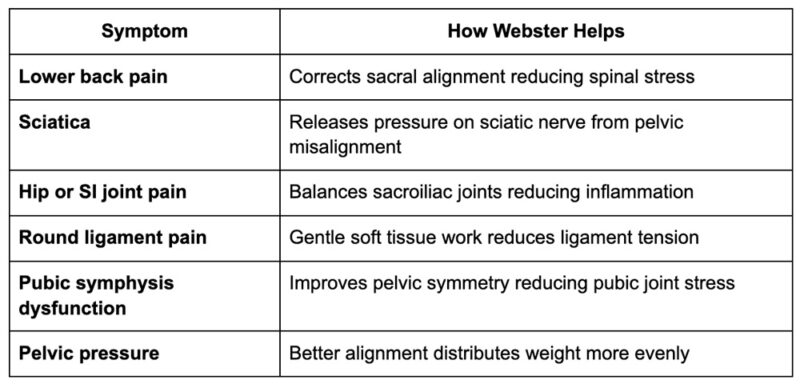
Benefits of the Webster Technique for common pregnancy complaints:
Supporting Optimal Fetal Positioning (Not “Turning the Baby”)
Important distinction: The technique doesn’t manually reposition babies. Instead, by improving pelvic balance and reducing intrauterine constraint, it creates an environment where babies can move more freely.
Many practitioners report reduced breech rates among patients receiving Webster care, though babies make their own positioning choices.
Improving Mobility & Labor Experience
Webster Technique benefits for birth:
- Better pelvic motion during labor contractions
- Reduced muscular tension affecting birth canal
- Increased comfort in late pregnancy allowing more activity
- Improved body awareness and pelvic positioning for birth
Gentle, Non-Invasive, Drug-Free Option
Why many OBs and midwives recommend it:
The technique provides relief without medications that may affect the baby. It’s safe, evidence-informed, and complements standard prenatal care.
As a chiropractor Redding expectant mothers trust, I work collaboratively with OBs, midwives, and doulas to provide comprehensive pregnancy support.
Is the Webster Technique Safe?
Is the Webster Technique safe? Yes, when performed by certified practitioners.
Safety for Mother and Baby
The technique uses gentle pressure appropriate for pregnancy. No forceful twisting, cracking, or high-velocity adjustments. Specialized pregnancy tables accommodate growing bellies comfortably.
Why Birth Professionals Recommend It
Midwives, doulas, and progressive OBs recognize that pelvic balance improves pregnancy comfort and may facilitate easier births. Many maintain referral relationships with certified Webster chiropractors.
Contraindications, Precautions, Red Flags
Avoid Webster care if you have:
- Placenta previa or abruption
- Premature rupture of membranes
- Active preterm labor
- Ectopic pregnancy
- High-risk pregnancy complications
Seek immediate medical care for:
- Vaginal bleeding
- Severe abdominal pain
- Decreased fetal movement
- Signs of preterm labor
ICPA Certification and Safety Training
Certified practitioners complete extensive safety training covering pregnancy anatomy, contraindications, and when medical referral is necessary.
Research-Backed Insights
Studies by Alcantara et al. in Journal of Pediatric, Maternal & Family Health found adverse events from pregnancy chiropractic care were extremely rare (< 0.01%) and typically minor soreness.
Who Can Benefit from the Webster Technique?
Pregnant Women (Any Trimester)
Benefits throughout pregnancy:
- First trimester: Early pelvic balance prevents compensatory patterns as baby grows
- Second trimester: Maintains comfort as body changes rapidly
- Third trimester: Optimizes positioning and prepares pelvis for birth
Women With Pelvic Imbalance Symptoms
If you experience hip pain during pregnancy, uneven gait, or one-sided discomfort, Webster Technique may help.
Individuals With Prior Breech Pregnancies
Women whose previous babies were breech often seek Webster care proactively in subsequent pregnancies.
Moms Preparing for VBAC
Those attempting vaginal birth after cesarean benefit from optimal pelvic alignment and function.
Non-Pregnant Patients With Pelvic Dysfunction
While designed for pregnancy, the technique helps anyone with sacral misalignment or pelvic imbalance.
Signs You May Need the Webster Technique
Consider Webster care if you notice:
- Uneven belly shape or tension on one side
- Persistent hip or pelvic pain worsening as pregnancy progresses
- Difficulty walking, standing, or changing positions
- Visible or palpable pelvic asymmetry
- OB/midwife recommendation due to breech or posterior baby position
- Previous pregnancy complications related to positioning
Webster Technique vs. Standard Chiropractic Adjustments
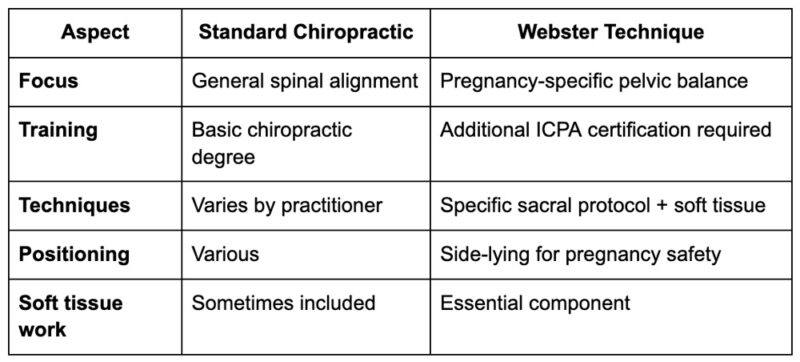
Key Differences
Why Pregnancy Requires Specialized Training
Pregnant bodies have unique needs: hormonal changes affecting ligament laxity, postural adaptations, growing belly requiring modified positioning, and considerations for fetal safety.
Why Webster Certification Matters for Safety
Certified Webster chiropractor practitioners understand pregnancy-specific anatomy, appropriate adjustment force, contraindications, and collaborative care with birth professionals.
Finding a Certified Webster Technique Chiropractor
How to Verify ICPA Certification
Visit the ICPA website (icpa4kids.com) and use their “Find a Chiropractor” directory. Verify practitioners completed Webster certification through ICPA.
Questions to Ask During Consultation
Before starting care, ask:
- Are you ICPA-certified in Webster Technique?
- What percentage of your practice is prenatal care?
- Do you have pregnancy-specific tables/equipment?
- Do you collaborate with local OBs/midwives?
- What’s your experience with my specific concern?
Signs You’re Working With a Qualified Provider
- ICPA certification displayed
- Pregnancy-specific adjustment tables
- Comfortable discussing pregnancy anatomy
- Collaborative approach with your birth team
- Clear communication about realistic expectations
Experience Comfortable Pregnancy With Webster Technique
What is the Webster Technique? It’s a specialized, research-supported approach helping pregnant women experience greater comfort, improved pelvic function, and optimal biomechanics for birth.
At Chiropractic First, we’ve helped hundreds of expecting mothers find relief from pregnancy back pain, pregnancy sciatica relief, and pelvic discomfort through gentle, certified Webster care.
Don’t spend your pregnancy in pain. Schedule your Webster Technique evaluation today. We’ll assess your pelvic alignment, explain exactly how the technique can help, and create a care plan supporting your most comfortable pregnancy and optimal birth experience.
Frequently Asked Questions
Does the Webster Technique hurt?
No. The technique uses gentle pressure appropriate for pregnancy. Most women find sessions comfortable and relaxing.
Can the Webster Technique induce labor?
No. The technique addresses pelvic alignment – it doesn’t trigger labor. Some women report easier labors due to improved pelvic mechanics.
Is it safe in the first trimester?
Yes, when performed by certified practitioners. Early care often prevents discomfort from developing as pregnancy progresses.
How early in pregnancy should I start?
Anytime. Some women begin preconception to optimize pelvic alignment. Others start when discomfort develops. Earlier is generally better for preventing problems.