SoftWave Therapy vs Shockwave Therapy: Are They the Same or Different?
When people compare SoftWave therapy vs shockwave therapy, they often think the two are the same thing with different names. They are close cousins, not twins. Both use sound waves to ease pain and nudge your body into healing. But they build those waves in different ways, cover different amounts of space, and aim at slightly different goals. This guide walks through how each one works, where they overlap, and how to pick the right fit.
What is SoftWave Therapy?
SoftWave therapy is a treatment that helps your body repair itself. It sends a broad, spread out sound wave into the sore area. Instead of just quieting the pain for an hour, the wave is meant to switch on repair down at the cell level.
That wave gets fresh blood flowing, helps tissue rebuild, and may wake up the resting repair cells your body already carries. Because it works this way, many providers reach for SoftWave when a stubborn ache has not budged with rest, ice, or the usual care. Sessions feel gentle, skip surgery, and let you walk out and get on with your day right away.
What is Shockwave Therapy?
Shockwave therapy is really a family of tools, not one single machine. Depending on the device, it may fire a tightly focused wave or a softer, spread out one. Either way, the idea is the same. Send steady, controlled energy into hurt tissue so the body starts fixing it and the pain eases off.
This kind of care has been part of sports medicine and physical therapy for decades, and a good stack of studies backs it up. Some machines reach deeper. Others cover more ground. What a session feels like depends on which tool your provider uses and how high they set it.
SoftWave Therapy vs Shockwave Therapy: The biggest differences
Although the names sound similar, there are meaningful differences between these treatments.
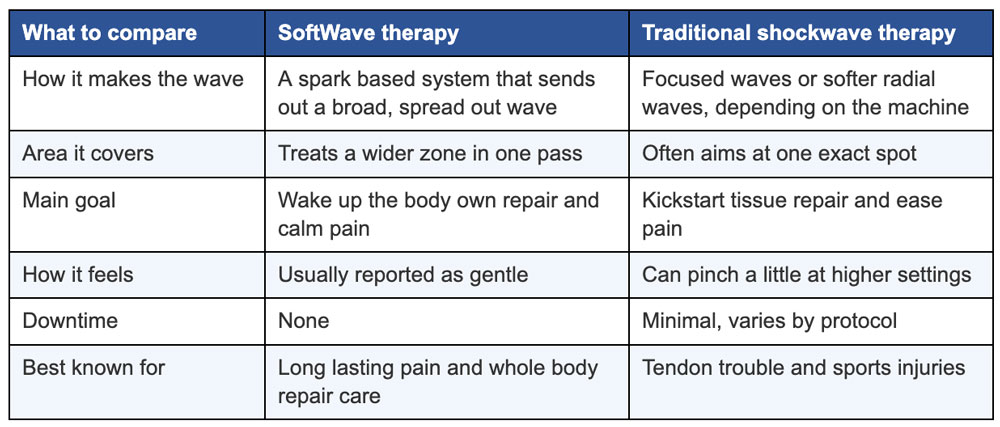
One thing to keep in mind. The tool matters less than the hands using it. Your result leans most on the right diagnosis, the true cause of the pain, and a provider who has done this many times.
So are they the same or not?
Short answer, no. They live in the same family, but SoftWave uses its own spark based system that spreads the wave wider than most standard shockwave machines do.
Think of two cars. Both get you across town, but one is built for the open highway and the other for tight city streets. Same goal, different design, and each shines in its own setting. That is why you may notice a real gap in comfort, in how much area gets treated, and in what the session is trying to fix.
Which conditions can benefit from acoustic wave therapy?
Both SoftWave Therapy and Shockwave Therapy are commonly used to treat a wide range of musculoskeletal conditions, including chronic shoulder, neck, hip, knee, and lower back pain, as well as plantar fasciitis, tennis elbow, golfer’s elbow, rotator cuff injuries, Achilles tendon problems, sports injuries, and other soft tissue conditions. However, not every patient is an ideal candidate. A thorough evaluation is the best way to determine whether acoustic wave therapy is appropriate and which treatment approach is most likely to deliver the best results.
Which one is better?
There is no single winner, because no two bodies or injuries match. SoftWave tends to suit people who want a repair focused option that covers a wider area and stays gentle through the session. Focused shockwave tends to win when the trouble is one specific tendon or one small spot that needs a concentrated hit.
The best way to settle SoftWave therapy vs shockwave therapy is to sit with a provider who examines you, listens, and points you toward the option that fits your actual diagnosis, not the one they happen to be promoting that month.
What a SoftWave therapy session feels like
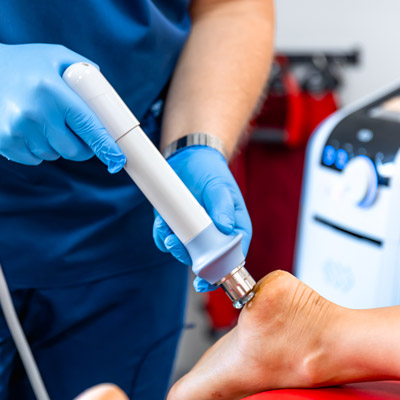
A SoftWave Therapy session is usually quick and does not require anesthesia or downtime. While every treatment plan is personalized, most visits follow a similar process.
- Your provider performs an evaluation. Before treatment begins, your provider reviews your symptoms, examines the affected area, and confirms whether SoftWave Therapy is appropriate for your condition.
- The treatment area is prepared. A small amount of ultrasound gel is applied to the skin. The gel helps the acoustic waves travel efficiently into the underlying tissue.
- The provider maps the injured tissue. Before treating the area, the SoftWave applicator is moved over the region to identify areas of inflammation or tissue damage. These “hot spots” often feel more sensitive and help guide the treatment to the tissues that need it most.
- SoftWave Therapy is delivered. The provider continues moving the applicator across the treatment area while delivering broad focused acoustic waves. Most people describe the sensation as a gentle tapping or pulsing. Areas with more inflammation may feel temporarily more sensitive, but the treatment is generally well tolerated.
- You can return to normal activities. Once the session is finished, there is usually no downtime. Most patients go back to work, exercise, or their normal daily routine the same day. Some people notice improvement after the first visit, while others experience gradual progress over several sessions as the body’s natural healing response develops.
Is SoftWave Therapy safe?
When performed by trained healthcare professionals, SoftWave Therapy has an excellent safety profile for appropriately selected patients.
Side effects are generally mild and temporary. They may include:
- Mild soreness.
- Temporary redness.
- Slight tenderness after treatment.
Patients with certain medical conditions, active infections, blood clotting disorders, or pregnancy should discuss treatment options with their healthcare provider before beginning therapy.
How to pick the right clinic
The machine is only half the story. The clinic behind it decides most of your results. Look for a place that gives you:
- A full hands on exam before any treatment
- A plan built for your body, not a one size script
- Care backed by evidence, explained in plain words
- Real experience with muscle, tendon, and joint pain
- Honest talk about what results to expect
- Exercises and daily tips to make the care last
A provider worth trusting will walk you through your choices honestly and match the treatment to your diagnosis, rather than selling the same fix to everyone who walks in.
Conclusion
When comparing SoftWave Therapy vs Shockwave Therapy, it becomes clear that they share the same goal but use different technologies to help stimulate healing and relieve pain. Neither treatment is universally better. The right choice depends on your diagnosis, overall health, and the clinical judgment of an experienced provider.
At Chiropractic First, Dr. Todd Royse and the clinical team focus on evidence based, patient centered care for musculoskeletal pain and injury recovery. Every patient receives a thorough evaluation before any treatment recommendation is made. If you are exploring non surgical options for chronic pain, sports injuries, or joint discomfort, learning whether acoustic wave therapy is appropriate may be a valuable next step.
Frequently asked questions
Is SoftWave Therapy more effective than Shockwave Therapy?
Not necessarily. Both therapies have clinical value. The best option depends on your condition, treatment goals, and your provider’s assessment.
Is the treatment painful?
Most patients tolerate both treatments well. Some discomfort may occur depending on the treatment area and the energy level used.
How many sessions will I need?
Many patients receive between three and six sessions, although the exact number varies based on the condition being treated.
Is there any recovery time?
Most people return to work and normal daily activities immediately after treatment.
Are the results permanent?
Results vary from person to person. Long term success often depends on treating the underlying cause, following rehabilitation recommendations, and maintaining healthy movement habits.