Heavy Backpacks and Back Pain in Children: What to Watch for
Books, laptops, water bottles, and school supplies can quickly make a child’s backpack heavier than expected. Carrying too much weight or wearing a backpack incorrectly every day can lead to discomfort in the back, neck, and shoulders.
At Chiropractic First in Redding, CA, we often encourage parents to pay attention to how everyday habits affect a child’s posture and growing spine. This article covers the warning signs to watch for, how to check backpack weight, and when a posture check may be helpful.
How can heavy backpacks affect a child’s back?
Extra weight changes how the body carries the load
A loaded bag pulls a child backward. To stay balanced, they tip forward or arch the low back, and they hold that position for as long as the bag is on.
Muscles across the shoulders, neck, and mid back then work overtime to keep the body upright. Ten minutes of that is nothing. A full school day, five days a week, is a different question.
Heavy backpacks put more stress on back muscles
When children carry a heavy backpack for a long time, the muscles in the back, shoulders, and neck have to work harder to keep the body steady. If this happens every day, children may feel tired, tight, or sore in their back after school.
Sitting for long hours, using phones, and playing sports can also add more stress to the body during the day.
This does not mean that a heavy backpack will cause serious spine problems. However, regular back pain or changes in posture while carrying a backpack are signs that parents should pay attention to.
Weight is not the only problem. How your child carries it matters
Two kids can carry identical bags and only one ends up sore. Habits explain much of the gap. Watch for:
- Slinging the bag over a single shoulder
- A loose fit that lets the pack hang low on the hips
- An oversized bag that invites overpacking
- Heavy items thrown in the outside pocket
- Books that never leave the bag all semester
- Wearing it for the whole day without a break
The backpack and posture connection
Kids compensate without noticing. Over months, the compensation starts to look like their normal posture.
Things parents can spot from across the room include the head drifting forward, a rounding of the shoulders, one shoulder sitting higher than the other, leaning toward one side, and walking bent forward to compensate for the load. An improperly worn pack makes all of it more obvious.
Poor posture in a growing body is worth attention on its own, since postural habits formed at 12 rarely fix themselves at 20.
See more: How Can Poor Posture Result in Back Pain?
Signs the backpack may be causing too much strain
- Soreness after school that eases on weekends
- Neck or shoulder complaints
- Red marks where the shoulder straps sit
- Tingling or pins and needles in the arms while wearing it
- Struggling to lift the bag onto the back
- Visibly bending forward while walking
- Skipping activities because of discomfort
- Pain that stays after the bag comes off
That last one matters most. Discomfort that fades within minutes of taking the bag off is usually fatigue. Pain that lingers, returns weekly, or comes with tingling should be evaluated.
How heavy should a child’s backpack be?
According to the American Academy of Pediatrics, a backpack should weigh no more than 15% of a child’s body weight. For example, a child who weighs 100 pounds should carry a backpack that weighs no more than 15 pounds. If your child has to lean forward to carry the backpack, it may be too heavy.
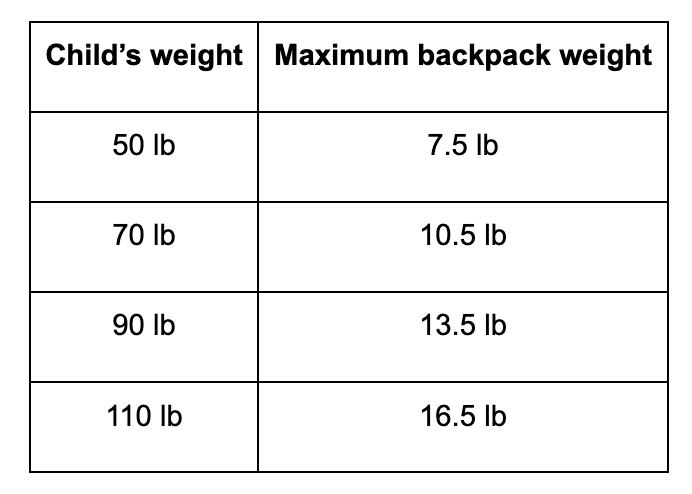
Checking the weight is simple. Weigh your child first, then weigh the fully packed backpack. Compare the two numbers to make sure the backpack is not too heavy. The AAP also recommends cleaning out the backpack each week, removing items your child does not need, and using a school locker when possible.
6 ways to make backpacks safer
- Use both straps. One strap loads the weight onto one side of the body. Using both straps spreads it across the back the way the bag was designed to.
- Tighten the fit. The pack should sit against the back with the bottom resting at or just above the waistline. A backpack that hangs low drags the child backward.
- Match the size to the child. The bag should be no wider than your child’s torso. Try the sit test: when your child sits down, the pack should not rest on the chair seat. If it does, it is too big.
- Load heavy items closest to the back. Textbooks against the back, light things in the outer compartment. This keeps the weight from pulling away from the body.
- Empty it weekly. Sunday night, everything comes out. Ask what actually needs to travel, and whether the school allows students to use their lockers between classes.
- Watch how they stand. Look at your child from behind with the bag on and again with it off. Wide, padded shoulder straps help distribute the weight evenly, while thin ones dig into the shoulders. Ask them to take frequent breaks from the bag when the school day allows it.
Teach the lift, too. Bend at the knees, keep the bag close, and lift with the legs rather than the lower back.
What if the pain does not go away?
Changing the backpack weight and the way your child carries it is a good first step when they often have pain after school. But if the pain continues even after making the backpack lighter and adjusting the straps, it may need more attention.
A backpack that is too heavy or worn the wrong way can make the muscles in the back, neck, and shoulders work harder. When this happens every school day, soreness or pain may last longer instead of going away soon after the backpack comes off.
Watch for pain that happens often after school. Also notice if your child leans forward while carrying the backpack, feels pain in the same area for several days, or avoids activities because of discomfort.
In these cases, a posture and spine evaluation can help find out if backpack weight, the way the backpack is carried, or changes in posture may be adding to the pain.
How Chiropractic First looks at posture and back pain in kids
Dr. Todd Royse, DC, has spent 25 years in corrective chiropractic care in Redding, and he is the only CBP certified chiropractor in the city. Chiropractic BioPhysics is a posture and alignment based method, which is why posture assessment is where an evaluation here starts rather than where it ends.
He is also a father of four boys, so backpack season is not a theoretical topic in his house.
A visit for a child usually covers a history, a look at how they stand and move, and a posture and spinal alignment assessment. Our pediatric care approach considers the whole picture of a growing back, and scoliosis screening sits alongside it when a curve is a possibility.
The goal is not to blame the backpack for everything. It is to work out what is contributing, and to say so plainly when the answer is simply that the bag weighs too much.
Help your child carry the school day without carrying the pain
Three things are worth doing this week. Weigh the packed bag against the 10 percent guideline. Watch how your child wears it on the way to the car. Notice whether complaints keep coming back.
Most soreness improves once the load and the habits change. What should not be ignored is pain that persists, or a posture that stays altered on a Saturday with no bag in sight.
If your child keeps mentioning back, neck, or shoulder pain, or you have noticed a change in how they stand, call us to schedule an appointment at Chiropractic First.
Frequently asked questions
Can a heavy backpack cause back pain in children?
It can contribute. Excess weight and poor carrying habits lead to muscle fatigue, soreness, and posture changes while the bag is on.
Why does my child lean forward while wearing a backpack?
The bag pulls them backward, so they tip forward to compensate and stay balanced. A pack that is too heavy or hangs too low makes the lean more obvious.
When should I have my child’s back checked?
When the pain keeps returning, it gets worse, limits activity, comes with numbness or tingling, or when posture changes remain visible without the bag.